OSPIE Launches 10 Essential Skills Alignment and Assessment Initiative
The Office of Strategic Planning and Institutional Effectiveness (OSPIE) successfully launched the 10 Essential Skills Alignment and Assessment Initiative with two kickoff sessions held on August 18 and August 21, 2026. More than 40 faculty members and academic professionals representing seven colleges and the Martin School of Public Policy and Administration participated across the two sessions, bringing perspectives from a wide range of disciplines and academic programs.
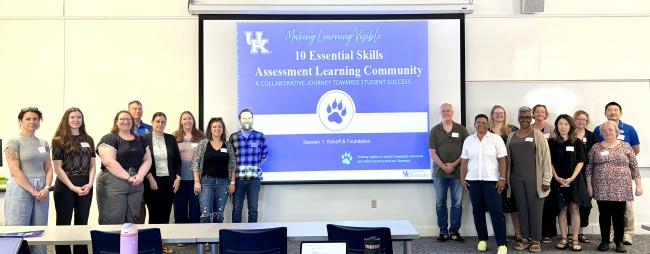
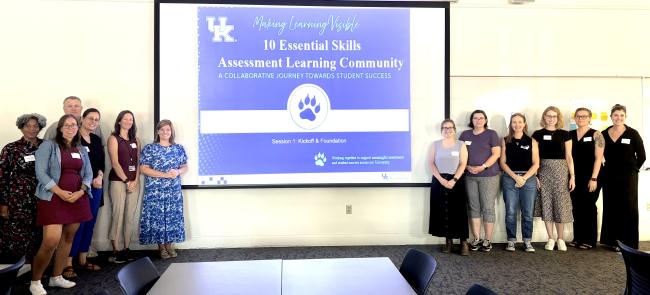
The yearlong initiative brings together faculty teams from across the university to explore how Kentucky's 10 Essential Skills can be intentionally embedded, aligned, and assessed within academic programs. Developed by the Kentucky Council on Postsecondary Education (CPE), the Essential Skills framework identifies competencies that support students’ academic, professional, and civic development.
Rather than viewing assessment simply as a way to measure learning, the initiative emphasizes assessment as a tool for helping faculty understand how students develop essential skills and how programs can use evidence of learning to strengthen the educational experience.
Making Learning More Visible
During the kickoff sessions, participants explored the purpose of assessment and its role in supporting student learning and continuous improvement. They were introduced to the 10 Essential Skills framework and began connecting the framework to their own programs, considering where the skills are reflected in existing learning outcomes, curriculum and assessment practices. Participants also discussed the goals of the initiative and how the yearlong process will support their continued work in these areas.
Participants were also introduced to the initiative’s structure, assignments, and milestones. Throughout the 2026-27 academic year, faculty teams will engage in workshops, coaching meetings, and collaborative activities focused on program-level alignment and assessment.
Cross-Campus Collaboration
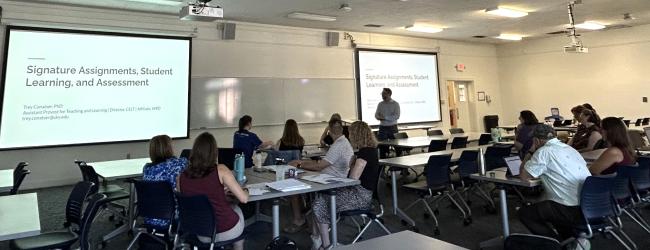
A highlight of the kickoff sessions was the opportunity to hear from campus partners who shared perspectives from different aspects of student learning and success.
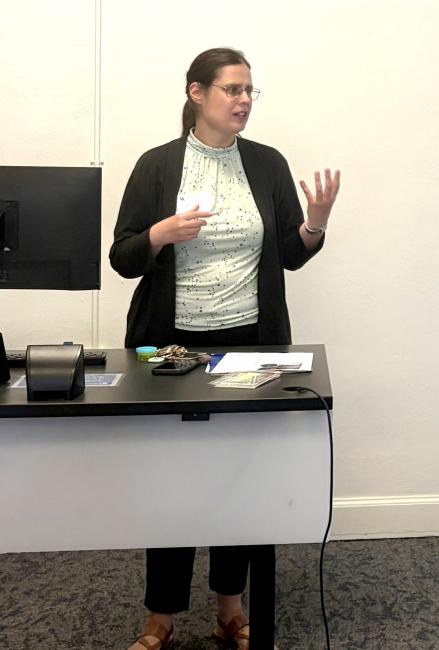
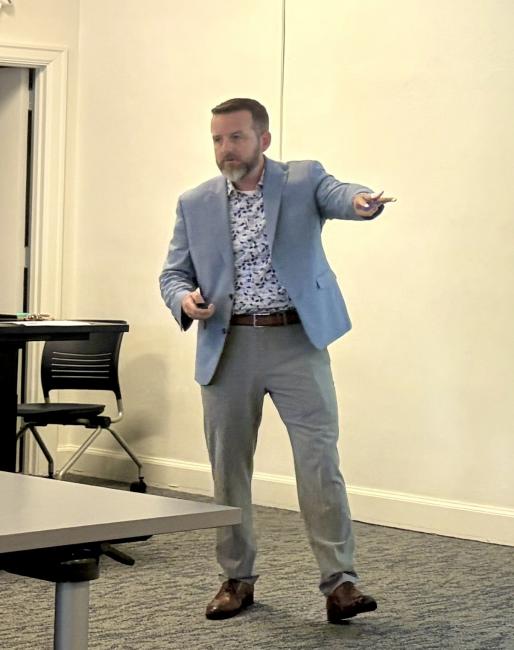
Representatives from the Center for the Enhancement of Learning and Teaching (CELT) discussed the relationship between signature assignments, student learning, and assessment. Participants explored ways course and assignment design can make learning goals more intentional and visible to students.
The Stuckert Career Center contributed employer and workforce perspectives, helping participants consider how students develop and articulate transferable skills that are valued beyond the classroom.
Colleagues from the Martin Gatton College of Agriculture, Food and Environment's Innovation and Teaching Team (CAFE) shared perspectives on incorporating student voice into academic program revision and engaging students through active teaching and learning approaches. They also provided examples of how the 10 Essential Skills can be intentionally illustrated and reinforced through students’ learning experiences, offering participants additional ways to think about how students experience and develop these skills within their academic programs.
|
|
|
Together, these presentations reinforced the initiative's central theme: meaningful assessment is not simply about measuring learning, but about using evidence to support student development and continuous improvement.
Looking Ahead
Throughout the 2026-27 academic year, participants will move from exploration to application through a sequence of assignments and collaborative activities. Key milestones will include curriculum mapping, program learning outcomes alignment, assessment and rubric development, and program reflection.
As faculty teams examine their programs through the lens of the 10 Essential Skills, the initiative will create opportunities to strengthen connections among what students are expected to learn, what they experience in the curriculum, how their learning is assessed, and how that evidence can be used to improve programs.
OSPIE is grateful for the enthusiasm, expertise, and commitment demonstrated by participating faculty, academic professionals, and campus partners. The 10 Essential Skills Alignment and Assessment Initiative represents an important opportunity to strengthen connections among student learning, career readiness, and continuous improvement, and to help make the learning students gain through their UK experience more visible, intentional, and meaningful.
Appendix: Participating Faculty and Team Members
College of Agriculture, Food and Environment
| Dr. Hannah Angel | Dr. Alicia Benben | Dr. Krista Hein | Dr. Kristine Urschel | Ms. Amanda Mayo |
| Dr. David McNear | Dr. Savannah Robin | Dr. Christopher Shepard | Dr. Jack Schieffer | Dr. Jill Stowe |
| Dr. RayeCarol Cavender | Dr. Tracy Lu | Dr. Shuoli Zhao | Dr. Min Young Lee | Dr. Hermonie Bettenhausen |
College of Arts and Sciences
| Dr. Molly Blasing | Dr, Ruth Brown | Dr. Heather Campbell-Speltz | Dr. Juan Fernández Cantero | Dr. Edward Lee Bullock |
| Dr. Brenna Byrd | Dr. Vanessa M. Holden | Dr. Julie Human | Dr. Brianna Janssen Sanchez | Dr. Laura Manning |
| Dr. Pete Mirabito | Dr. Shauna Morgan | Dr. Jennifer Osterhage | Dr. Shannon Plank | Dr. Jeorg Sauer |
| Dr. Jessica Santollo | Dr. Melissa Stein | Dr. Heather Worne | Dr. Laura Manning | Dr. Brenna Bryd |
| Dr. Frances Henderson | Dr. Matt Godbey |
College of Communication and Information
| Dr. Adriane Grumbein |
College of Education
| Dr. Justin Nichols |
College of Fine Arts
| Dr. Matt Page Brock |
Graduate School
| Dr. Cory Curl |
College of Public Health
| Dr. Hannah Cardona | Dr. Naomi Hudson |